
AI & Technology
The Next Version of Software Is Not an App. It’s a System That Can Act
Key idea: The most valuable AI products will not be the ones that talk the most. They will be the ones that reduce friction, protect trust, and help people turn intention into action.
For the last few years, most AI products looked almost identical: a text box, a prompt, and a generated answer.
That era is ending.
The most important change in AI is not that models can write better emails, generate prettier images, or produce more code. The real shift is that software is moving from answering questions to taking structured action.
Modern AI systems can inspect files, use tools, search for information, run commands, edit code, connect to business data, and complete multi-step tasks inside controlled environments. AI is becoming less like a chatbot and more like a digital teammate that can understand context, make suggestions, and perform useful work under human supervision.
That changes how we should think about products, developers, and the future of technology.
We Have Moved Beyond “Add a Chatbot”
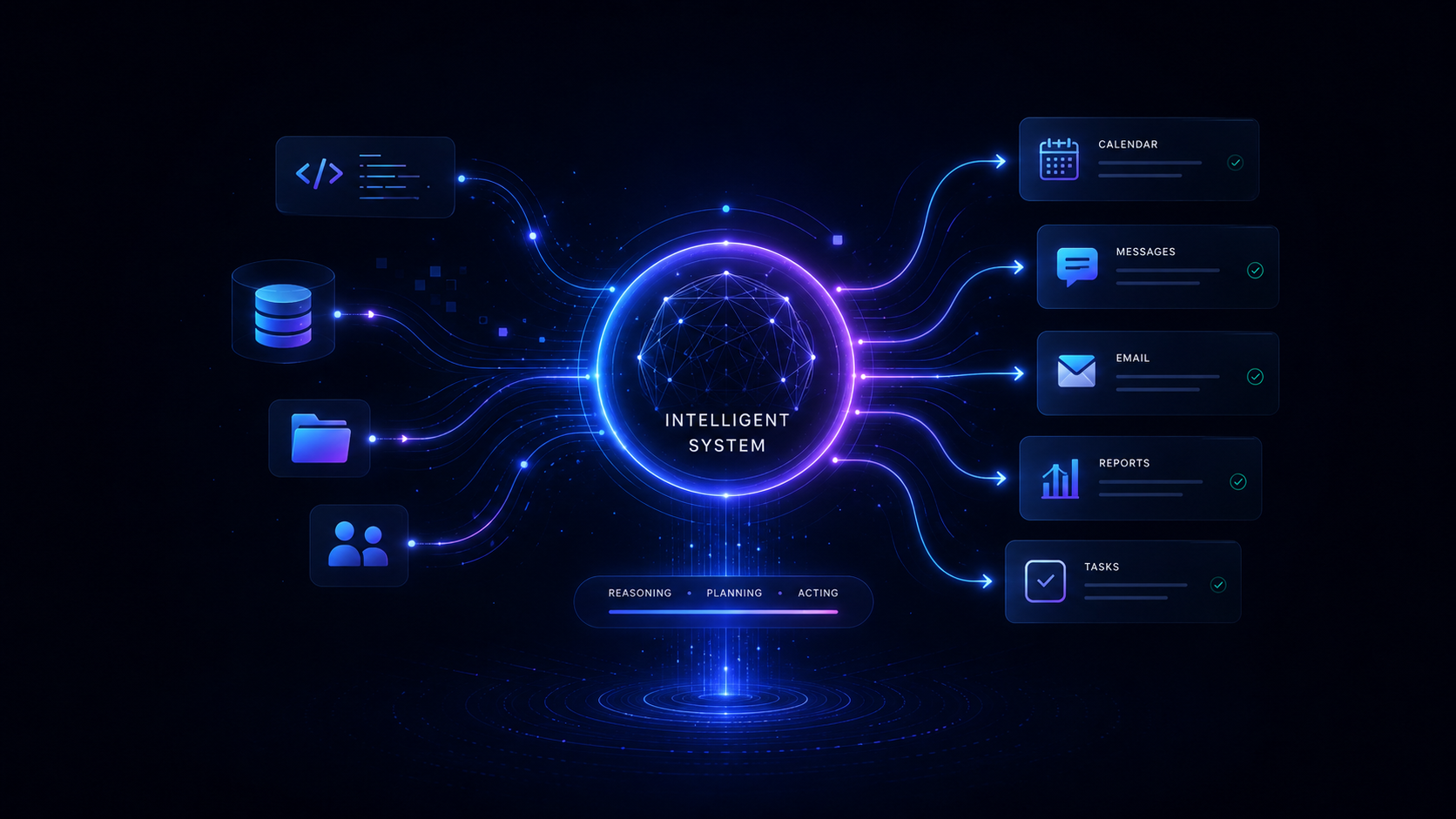
A chatbot can answer:
“What was my total expense this month?”
But an intelligent product should be able to do more.
It should understand the user’s financial history, identify unusual spending, explain why a balance changed, prepare a monthly summary, remind the user about an unpaid loan, and ask for approval before taking an important action.
That is the difference between AI as a feature and AI as part of a real product experience.
The strongest AI products will not simply add a floating chat icon in the corner. They will use intelligence quietly inside the workflow.
For example:
· A finance app can explain transactions in plain language.
· A restaurant POS system can flag potential stock shortages before they interrupt service.
· A support system can classify requests, prepare replies, and escalate risky cases.
· A portfolio platform can help visitors understand a builder’s work instead of making them search through pages.
· A small-business dashboard can turn raw numbers into decisions.
The goal is not to make every product “look futuristic.” The goal is to remove friction from real work.
The Model Is Not the Product
Many people are focused only on which AI model is strongest. But the model alone is rarely the product.
A useful AI system needs five things:
1. Context
AI becomes valuable when it understands the right information. A generic model can write a business plan. A connected model can understand a company’s products, customers, inventory, transactions, policies, and workflow. Without context, AI gives polished but generic answers. With context, it can become useful.
2. Tools
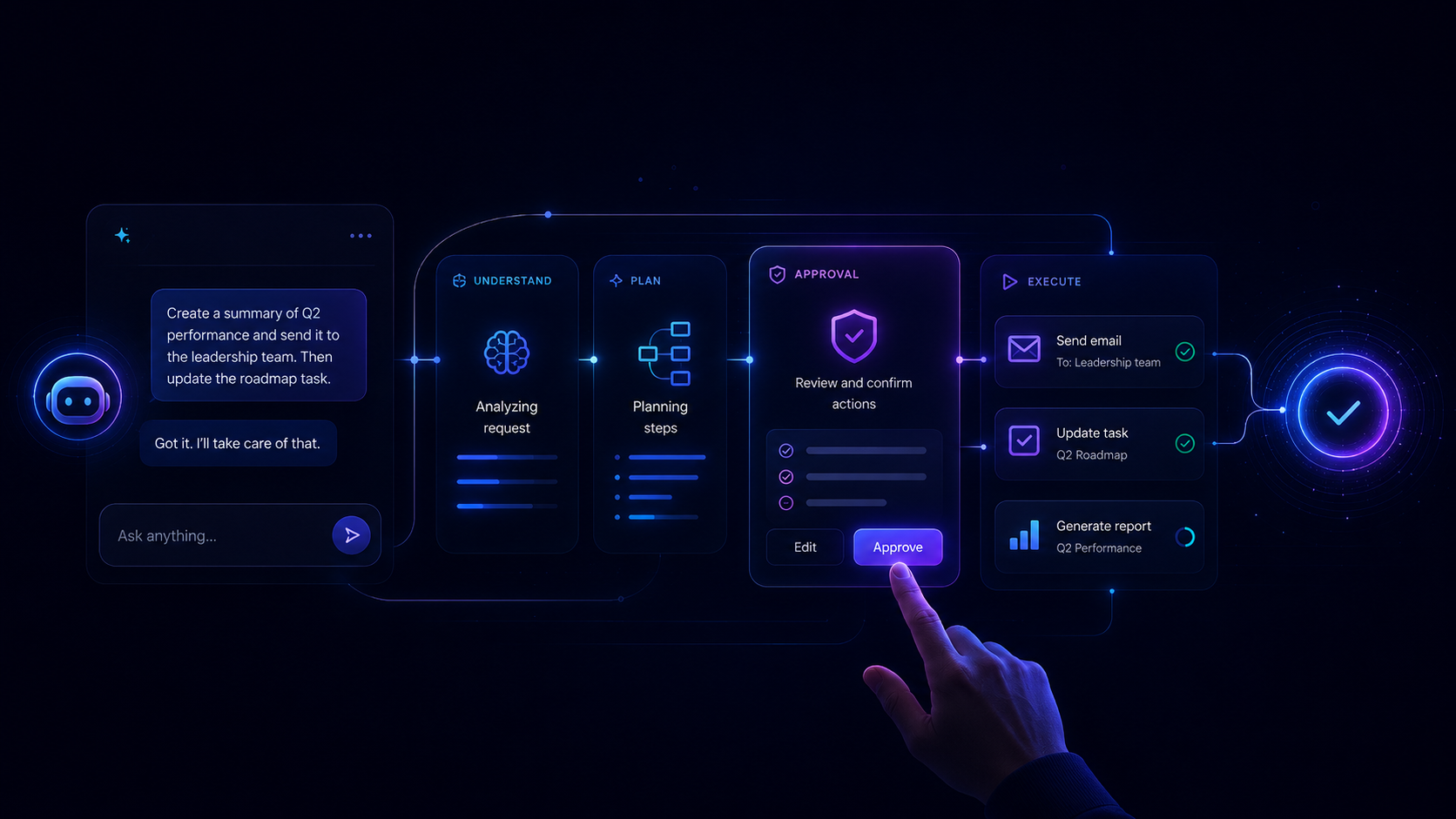
An AI system should not only generate text. It should be able to use controlled tools: searching a database, reading a document, sending a draft email, generating a report, checking inventory, updating a task, or creating a support ticket. Model Context Protocol (MCP) is one approach for connecting AI applications with external systems, data sources, and tools in a structured way. [2]
3. Permissions
The more capable AI becomes, the more important permission design becomes. An AI assistant should not be able to send money, delete important data, change user roles, or contact customers without clear rules and approval. Good AI products should always answer three questions: What can the AI see? What can the AI do? What actions require human approval?
4. Verification
AI can be fast, helpful, and impressive, but it can still be wrong. Important systems need checks. An AI-generated report should show the data source. A financial explanation should link back to the transactions. A coding agent should run tests before creating a pull request. A customer-support agent should escalate uncertain cases instead of confidently inventing answers.
5. Experience
Even the most powerful AI is useless if the user experience feels confusing. Users should not need to understand prompts, tokens, context windows, agents, or model names. They should only feel that the product understands what they are trying to do. The best AI experience will often feel invisible.
Coding Is Becoming More About Direction Than Typing
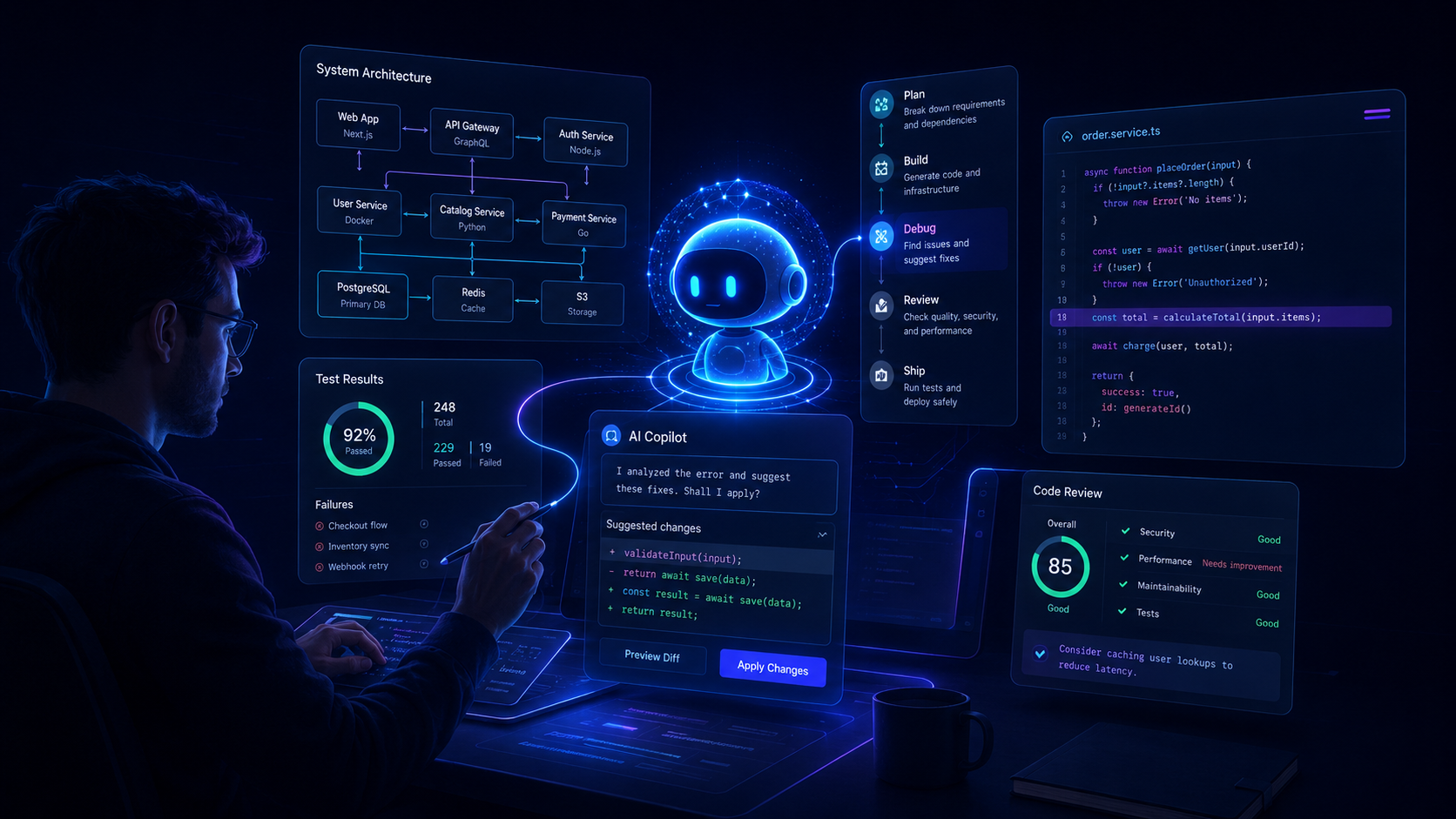
AI is changing software development too.
Developers are no longer only writing every line manually. We are increasingly becoming architects, reviewers, product thinkers, and system designers.
AI can help generate components, debug errors, explain unfamiliar codebases, write tests, create documentation, and speed up repetitive work. OpenAI’s agents tooling, for example, is designed for workflows that can inspect files, run commands, edit code, and work on longer tasks in controlled environments. [1]
But this does not make engineering less important. It makes judgment more important.
The highest-value skills are becoming:
· Writing clear product requirements
· Designing reliable data structures
· Understanding users and business workflows
· Reviewing AI-generated code critically
· Protecting privacy and security
· Creating tests and acceptance criteria
· Knowing when automation should stop
AI can generate a lot of code. But it cannot automatically understand what matters most to your users, your business, or your reputation. That responsibility still belongs to people.
Smaller, Faster, and Closer to the User
Not every AI task needs a giant cloud model.
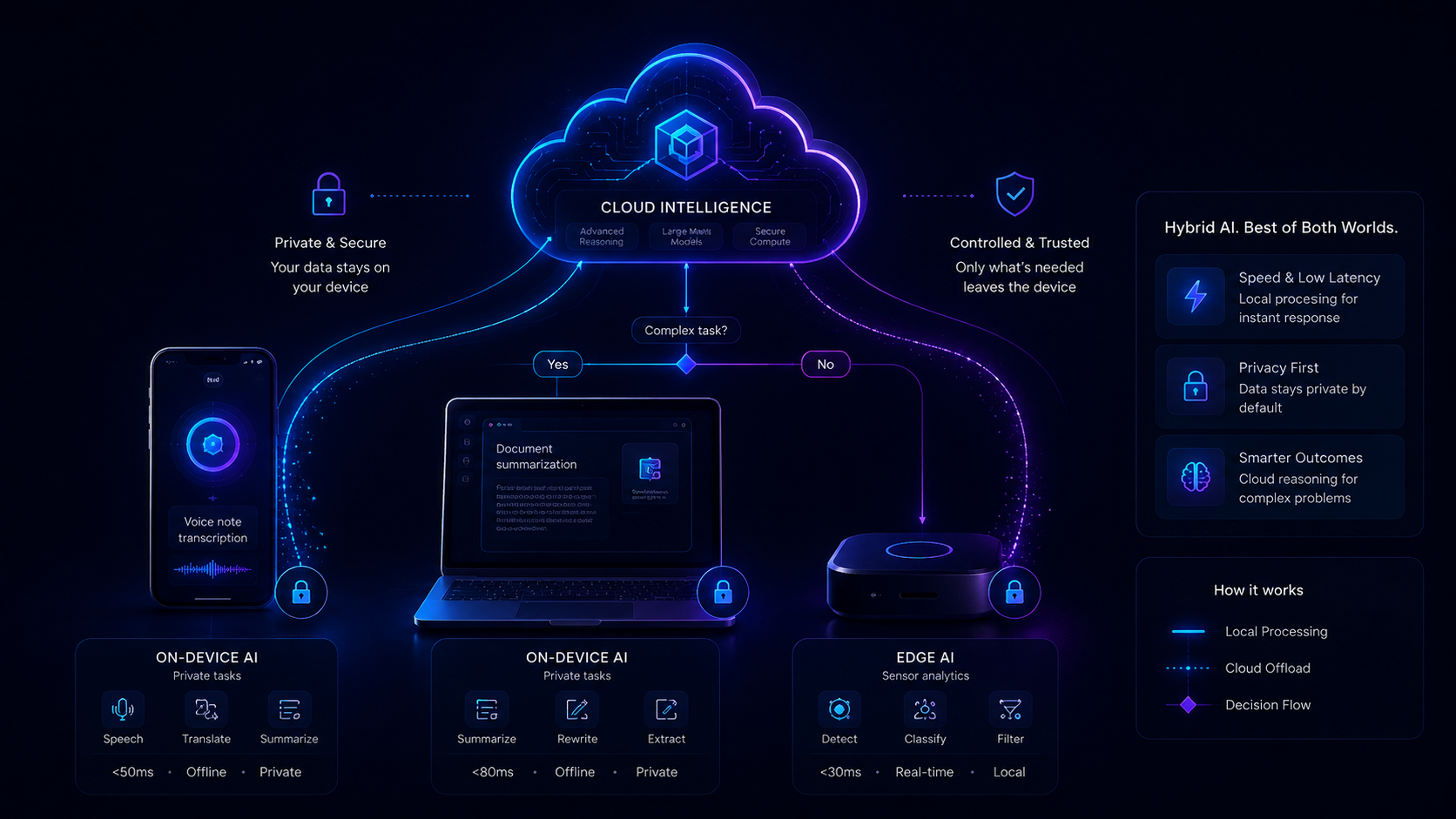
One of the most practical directions in technology is on-device AI: models that can run directly on phones, laptops, and edge devices. This can improve privacy, reduce latency, support low-connectivity environments, and reduce the cost of repeatedly calling cloud APIs.
Google’s AI Edge documentation shows that developers can run language-model tasks completely on-device for Android, including text generation, natural-language retrieval, and document summarisation. [3]
The best future products may use a hybrid approach:
· Small local models for quick, private, everyday tasks
· Cloud models for difficult reasoning and larger-scale analysis
· Human approval for sensitive decisions
That combination will often be more practical than sending every small action to a large model in the cloud.
What I Am Building Toward
While working on products such as finance tools, operational systems, and digital platforms, I am trying to think beyond adding AI just because it is popular.
I want AI to solve useful problems.
For example:
· Explaining financial changes instead of only showing numbers
· Turning raw business data into understandable daily insights
· Helping users find actions they may have forgotten
· Converting messy notes or messages into structured workflows
· Preparing drafts, summaries, and reports without removing human control
· Giving business owners clarity without making them learn complex dashboards
The best AI feature is not the one that gets the most attention. It is the one that saves someone time, prevents a mistake, or helps them make a better decision.
The Future Will Belong to Focused AI Products
The next generation of successful products will not be the ones with the loudest “Powered by AI” label.
They will be the ones that answer a simple question:
“Does this make the user’s work meaningfully easier?”
A great AI product should feel reliable, focused, and respectful.
· It should understand context.
· It should protect user data.
· It should show its work.
· It should ask before taking risky action.
· It should make people feel more capable—not less important.
The future of software is not one giant assistant replacing every app. It is a new generation of focused systems that help people turn intention into action.
And the builders who understand both technology and people will shape what comes next.
References
[1] OpenAI. “The next evolution of the Agents SDK.” https://openai.com/index/the-next-evolution-of-the-agents-sdk/
[2] Model Context Protocol. “Introduction” and technical documentation. https://modelcontextprotocol.io/docs/getting-started/intro
[3] Google AI for Developers. “LLM Inference guide for Android.” https://ai.google.dev/edge/mediapipe/solutions/genai/llm_inference/android